Mostrando entradas con la etiqueta daring bakers. Mostrar todas las entradas

jueves, 27 de febrero de 2014

Pan de nutella (Nutella bread)

Para el mes de febrero en el reto de Daring Kitchen nos propusieron hacer panes decorados. En este caso he rellenado el pan de nutella, le he hecho una especie de nudos y queda perfecto en porciones para compartir o llevar de capricho a la oficina.

Beauty surrounded the Daring Bakers this month as our host, Sawsan, of chef in disguise, challenged us to make beautiful, filled breads. Who knew breads could look as great as they taste?


Ingredientes:
 - 60 ml agua templada / warm water
-  180 ml leche templada / warm milk
- 1 huevo / egg
- 60 gr mantequilla ablandada / butter, softened
- 50 gr azúcar / sugar
- 3 gr sal / salt
- 450 gr harina / plain flour
- 8 gr levadura liofilizada / dry yeast
- Nutella
- Mantequilla y leche para poner por encima / Butter and milk for topping

Batimos en un bol la leche, el agua, el huevo, azúcar, mantequilla y levadura. En otro bol tamizamos la harina con la sal. Añadimos los ingredientes líquidos a la harina y amasamos hasta conseguir una mezcla suave y homogenea. Aceitamos un bol y metemos nuestra bola de masa. Cubrimos con un paño húmedo y dejamos reposar hasta que doble el volumen.

In a bowl whisk the egg, milk, water, sugar, butter and yeast. In another bowl shift the flour and salt. Add the wet ingredients to the flour and knead until you get a smooth dough. Brush a bowl with some oil and put you dough in. Cover with a damp cloth and leave it to double.

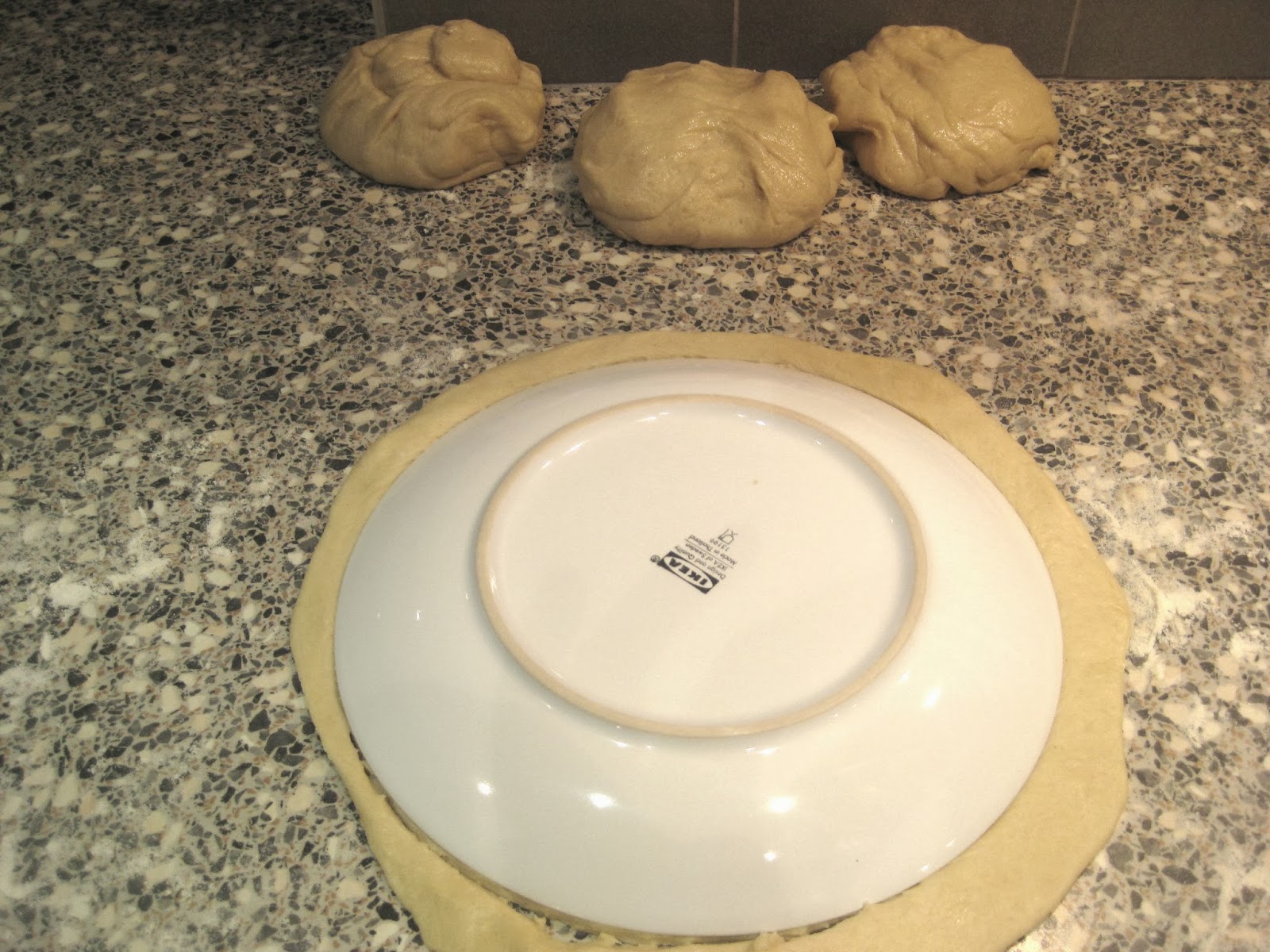
Ponemos la masa en una superficie ligeramente enharinada y la dividimos en 4 partes. Con un rodillo hacemos círculos de 20 cm de diametro cada uno.

Put the dough in a lightly floured surface. Divide in four equal part. Roll each part into 20 cm diameter circles.
Untamos cada capa con nutella, menos la última, que untaremos de mantequilla derretida.

Cover each layer with nutella, except the last one. Brush some melted butter on the fourth layer.


Cortamos la masa en 8 triángulos.A cada triángulo le hacemos un corte en el centro, sin llegar a las esquinas.

Divide the dough in 8 triangles and then make a cut in the middle of each triangle.

Cogemos la punta de un triángulo y la metemos por la ranura que hemos hecho, con cuidado que es un pringue con la nutella. Ponemos los triángulos en una bandeja de horno. Pinzamos la parte de atrás de cada triángulo para terminar de darle forma. Pincelamos los triángulos con leche. Dejamos reposar durante 15 minutos mientras precalentamos el horno a 200.

Take the tip of each triangle and pull it through the cut in the middle of the triangle. Put the triangles in a baking sheet. Pinch the base of the triangle together. Brush the triangles with milk. Let them rest for 15 minutes while we preheat the oven to 200.

Horneamos durante 15-20 minutos, hasta que cojan un tono dorado. Dejamos enfriar por completo antes de servir.
 
Bake for 15-20 minutes, until they get golden brown. Let them cool completely before serving.


martes, 29 de octubre de 2013

Chicken pot pie / Pastel de pollo

El mes de octubre de la página de Daring Bakers nos invita a preparar una receta anglosajona, pastel salado de doble masa, pot pie. Yo lo he hecho de masa de hojaldre relleno de un guiso de pollo con verduras. No soy muy fan de las "pies" pero como hay que probar de todo, allá vamos!

Hannah of Rise and Shine was our October 2013 Daring Bakers’ hostess and she challenged us to bake our own double crusted savory pot pies. Using any from-scratch crust and filling we choose, we were allowed to get completely creative with our recipe, showing off the savory flavors and fillings from our own home or region.


Ingredientes para dos raciones / Ingredients for two servings:


- 1 pechuga pollo / chicken breast
- 2 cebollas chalotas / shallots
- 100 gr de verduras varias / frozen vegetables from a bag (lazy version)
- 400 ml caldo de pollo / chicken stock
- 1 huevo / egg
- Sal y pimienta / Salt and pepper
- 250 gr de hojaldre / puff pastry
- 1/4 cucharadita sal / tsp salt
- 1/2 cucharadita de zumo de limón / tsp lemon juice

Cortamos el pollo en trozos y lo salpimentamos. Lo doramos ligeramente en una cazuela con aceite a fuego medio-alto. Sacamos y reservamos. Bajamos el fuego y ponemos a pochar las chalotas cortadas en brunoise. Cuando estén transparentes añadimos las demas verduras, el caldo de pollo y el pollo. Dejamos hacer a fuego medio durante 40 minutos, hasta qe el caldo reduzca.

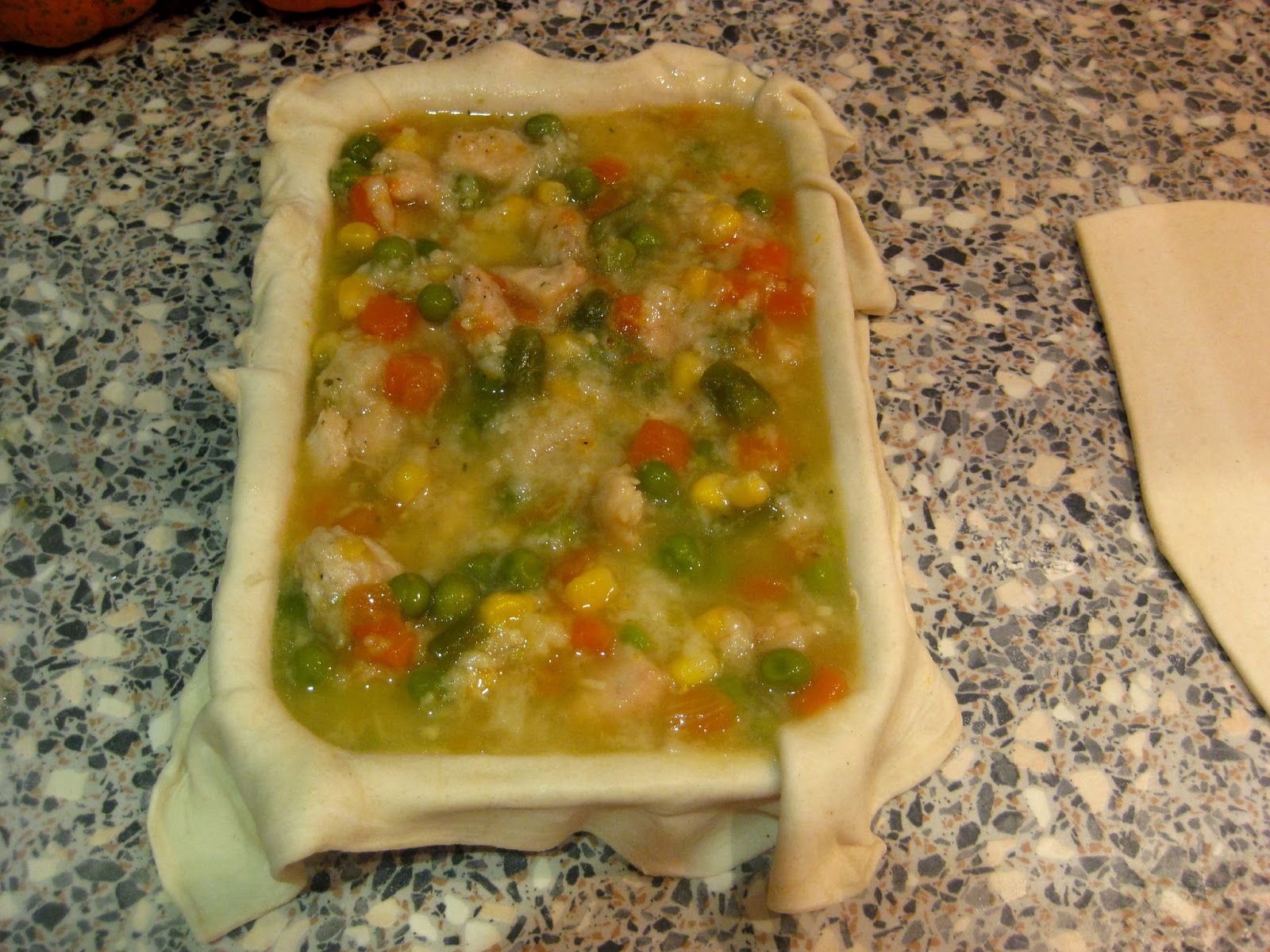
Mientras se hace el guiso enharinamos ligeramente la encimera y el rodillo. Estiramos el hojaldre en un rectángulo y lo cortamos en dos trozos suficientes para cubrir el molde por arriba y por debajo. Quitamos el guiso del fuego y dejamos que se enfríe un poco. Cubrimos el fondo y las paredes del molde con una de las laminas de hojaldre. Separamos la clara de la yema y pincelamos el hojaldre del molde con la clara. Vertemos el guiso y cubrimos con el otro rectángulo de hojaldre. La parte de arriba la pincelamos con la yema a la que habremos añadido un poco de agua.

Cut the chicken in cubes and season with salt and black pepper. Sautée the chicken until it is golden. Set aside. In the same pan, over low heat, cook the shallots until they are transparent. Add the remaining vegetables, the chicken stock and the chicken. Let it cook over medium heat for 40 min. The broth needs to thicken.

While the stew is cooking, dust the working surface and rolling pin with a bit of flour. Make two rectangles with the puff pastry, one for the bottom and another one as the cover. Take the stew form the heat and let it cool down a bit. Cover the pie pan with one of the pastry rectangles. Separate the yolk from the white and use the white to brush the puff pastry. Fill it now with the chicken stew and cover everything with the remaining pastry. Brush the top with the egg yolk and a bit of water.


Horneamos a 200 grados durante unos 40 minutos, hasta que el hojaldre esté hecho y doradito.

Bake at 200 for 40 minutes or until the puff pastry is cooked and has a nice golden colour.

jueves, 26 de septiembre de 2013

Pastel de tres leches

El mes de septiembre de Daring Bakers nos trae un postre típico de Latinoamérica, el pastel tres leches. Es un bizcocho genovés empapado en nata, leche evaporada y leche condensada. Ligerita, vamos.

Inma of la Galletika was our Sept. 2013 Daring Bakers’ hostess and WOW did she bring us something decadent and delicious! Pastel de Tres Leches or Three Milk Cake, creamy yet airy, super moist but not soggy.. just plain delish!


Ingredientes para molde de 15x20cm:


- 3 huevos / eggs
- 110 gr harina / flour
- 110 gr azúcar

Precalentamos el horno a 180. Separamos las claras y las batimos hasta que estén a punto de nieve. En otro recipiente batimos las yemas con el azúcar hasta que queden de color pálido y esponjosas. Añadimos la mezcla de yemas a las claras y mezclamos. Tamizamos la harina y la vamos añadiendo poco a poco a la mezcla con movimientos envolventes. No hay que pasarse removiendo porque queremos que no se nos baje el volumen de las claras, que es lo que hará que el bizcocho quede esponjoso.

Ponemos la mezcla en un molde previamente engrasado con mantequilla. Metemos al horno durante 25 minutos o hasta que un palillo salga seco. Dejamos enfriar en el molde 5 minutos y luego por completo en una rejilla

Preheat the oven to 180. In a bowl beat the egg whites until they double in volume (about 5 minutes). Beat the egg yolks with the sugar until they become lighter in colour and fluffy. Combine the yolk mix with the egg whites. Be gentle, we don't want to loose volume. Sieve in the flour and fold very gently into the mixture. Be careful not to overmix it, we want the batter to stay fluffy as this will gave the cake volume.

Pour the batter into a previously greased cake tin. Bake for about 25 minutes or until a toothpick comes out clean. Let it cool in the tin for 5 minutes and then transfer to a cooling rack.

Ingredientes para 3 leches / Ingredients for 3 milk syrup:


- 100 ml nata para montar / double cream
- 100 ml leche condensada / condensed milk
- 100 ml leche evaporada / evaporated milk
- 1 palo canela / cinnamon stick
- 1 chorrito de ron / splah of rum

En un cazo ponemos a calentar la nata, la leche condensada, la leche evaporada y el palo de canela. Cuando hierva bajamos el fuego y dejamos que cueza 5 minutos. Retiramos y cuando esté fría le echamos el ron. Partimos el bizcocho por la mitad y con una brocha lo embadurnamos con la mezcla de leches.

Bring to the boil the cream, condensed milk, evaporated milk and cinnamon. After it boils let it shimmer for 5 minutes at low temperature. Let it cool down and once it's cold add a splash of rum. Slice the cake in half and brush the 3 milk syrup all over it. 

Ingredientes para mermelada de mandarina  / Clementine marmalade:


- 3 mandarinas / clementines
- 7 cucharadas de azúcar / tbs sugar
- 250 ml agua / water
Pelamos las mandarinas. En un cazo cocemos las mandarinas con el azúcar y el agua. Dejamos cocer hasta obtener una pulpa homogénea. Dejamos enfriar.

Peel the clementines. Cook the clementines with the water and sugar. It needs to cook until we get a syrupy pulp. Let it cool.

Rellenamos el bizcocho con la mermelada. También ponemos mermelada en la parte de arriba para darle brillo. Decoramos y a comer.

Fill the cake with the marmalade. Brush some marmalade on top to glaze it. Decorate it with some clementines and enjoy.

sábado, 27 de julio de 2013

Gâteau fraisier

En el reto del mes de julio de Daring Bakers nos dejaron elegir cualquier receta de retos pasados. Yo le tenía echado el ojo al fraisier así que para una paella que hicimos unos amigos decidí volver a probar suerte con esta tarta.

El gâteau fraisier es una tarta francesa de bizcocho con fresas y crema muselina acabada con mazapán. Para hacerla mas ligera en este caso no he usado mazapán, si no que la he acabado con una capa de crema muselina. La gracia de esta tarta está en la decoración, con las fresas formando una especie de corona. Parece ligera pero no os fieis, la crema muselina es una crema pastelera enriquecida con mantequilla, calorias sin fin.
Para hacer más fácil el trabajo he dividido la receta en las diferentes capas que forman esta tarta: bizcocho genovés, sirope de patxaran y crema muselina.

In a "celebration" of past Daring Baker and Daring Cook challenges, Lisa challenged all of us to search through the Daring Kitchen archives and pick any one we'd like! The REAL challenge was picking which delicious recipe(s) to try! First time I heard about Daring Kitchen was when I was browsing the web for a recipe of a fraisier cake and came across several recipes citing DK. So I guess I had to do this cake, right?

Fraisier cake is a french cake made of sponge layers filled with museline cream (pastry cream with added butter) and fresh strawberries. It is then topped with a marzipan layer. In this case I decided to leave the marzipan out. The recipe is divided in sponge cake, sloe gin syrup and museline cream.


BIZCOCHO GENOVES / SPONGE CAKE:

- 4 huevos / eggs
- 125 gr azúcar / sugar
- 125 gr de harina bizcochona / self raising flour
- 50 gr de mantequilla derretida / melted butter
- Ralladura de 2 limones / zest of 2 lemons

Calentamos el horno a 180. Engrasamos y enharinamos un molde desmontable de 23cm. Separamos las claras de las yemas. Batimos las claras y vamos incorporando el azúcar poco a poco hasta que la mezcla aumente de volumen. Batimos las yemas y las incorporamos con cuidado a las claras. Añadimos también el limón.

Tamizamos la harina y añadimos dos tercios a la mezcla anterior, mezclamos con movimientos envolventes con una espátula o cuchara de metal para conservar el aire y no se nos baje la mezcla. Añadimos el resto de la harina y mezclamos otra vez con cuidado pero asegurándonos que toda la harina se ha incorporado bien. Es ahora cuando agregamos la mantequilla semiderretida y volvemos a darle al movimiento envolvente, de abajo a arriba.

Vertemos la mezcla en el molde y horneamos durante 25-30 minutos, hasta que veamos que el bizcocho se separa un poco de los bordes del molde. Debe tener un color dorado y al pinchar con un palillo salir limpio. Sacamos del horno, dejamos reposar 5 minutos. Sacamos del molde con cuidado y dejamos que se enfríe por completo en una rejilla.

Preheat the oven to 180 and lightly grease a 23cm springform cake tin. Whisk the egg whites with the sugar until it doubles its volume. Add now the egg yolks and gently mix everything together. Add the lemon and mix again with care. In another bowl sift the flour and add it to the previous mix with bottom to top movements with a spoon or spatula. We need to get air in the mix to get a fluffy cake. When all the flour is incorporated add the butter and mix in the same way again.

Pour the mixture into the cake tin and bake for about 25 to 30 minutes. The cake should detach itself from the tin sides a bit. It should have a golden colour. Take it out of the oven and let it rest for 5 minutes in the tin. Then take it out and let it cool completely in a cooling rack.


CREMA MUSELINA / MUSELINE CREAM:

- 600ml leche / milk
- 4 huevos / eggs
- 2 yemas de huevo / egg yolks
- 180 gr azúcar / sugar
- 1/2 cucharadita de extracto de vainilla / 1/2 tsp vanilla extract
- 100 gr de maizena / corn flour
- 150 gr de mantequilla en dados a temperatura ambiente / diced butter at room temperature

Ponemos la leche en un cazo de base ancha con la vainilla y dejamos que hierva. Quitamos del fuego. Batimos los huevos, el azúcar y la maizena en un bol. Añadimos la leche y mezclamos bien. Volcamos esta mezcla en una cazuela limpia y ponemos a fuego medio. Batimos constantemente hasta que la mezcla espese para que no se formen grumos. Debemos conseguir una crema muy espesa que podamos usar con la manga pastelera. En este momento añadimos la mantequilla y removemos hasta que se funda con el resto de la crema.

Sacamos del fuego y la pasamos a un recipiente ancho para que enfríe mas rápido. Tapamos con papel film que debe tocar la crema para que no se forme costra y dejamos en la nevera un mínimo de hora, hora y media.

Bring the milk with the vanilla to the boil. Remove from heat. Beat the eggs, sugar and corn flour together. Add the milk and stir well. Pour the mix in a clean pan over a medium heat. Stir continuously, it needs to thicken so we can use it with a pastry bag. We add the butter and stir until it melts and combines with the cream.

Remove from heat. Pour into a wide recipient so it cools down faster. Cover with cling film (it needs to touch the cream to avoid getting a crust). Leave it in the fridge for a minimum of one or one and a half hours.

SIROPE DE PATXARAN / SLOE GIN SYRUP:

- 75gr de azúcar / sugar
- 80 ml de agua / water
- 5 ml de patxaran / sloe gin

En un cazo ponemos el azúcar,el agua y el patxaran. Calentamos a fuego bajo y removemos hasta que se disuelva el azúcar. Reservamos.

In a pan heat together the sugar, water and sloe gin. Wait until the sugar disolves. Set aside.
FRESAS / STRAWBERRIES

- 500 gr
MONTAJE DE LA TARTA / ASSEMBLING THE CAKE

1

Forramos los laterales de nuestro molde redondo desmontable con papel de acetato.

Cover the tin with acetate plastic or cling film


2

Cortamos el bizcocho genovés por la mitad (horizontalmente)

Cut the sponge cke in two horizontally


3Colocamos una mitad en el fondo del molde. Lo pincelamos con el sirope. Partimos por la mitad las fresas y las colocamos formando un círculo con la cara cortada contra los laterales del molde

Put one layer in the bottom of the tin and soak it in syrup. Cut the strawberries in half and layer them around the tin sides with the cut part against the tin


4

Con ayuda de la manga pastelera ponemos una capa fina de crema muselina encima del bizcocho y rellenamos los huecos entre las fresas

Pipe the cream on top of the sponge and in between the strawberries
5

Cortamos el resto de las fresas en cuatro trozos y las colocamos en el centro de nuestra tarta. Rellenamos con mas crema muselina.

Cut the remaining strawberries into quarters and add them to the cake. Cover with more museline cream.


6

Colocamos la otra mitad del bizcocho encima y pincelamos con el sirope. Ponemos una capa fina de crema muselina encima y decoramos con fresas. Enfriamos en la nevera un mínimo de 8 horas

Put the second half of the sponge on top and cover with syrup. Put a layer of museline cream on top and decorate with strawberries. Leave in the fridge a minimun of 8 hours


jueves, 27 de junio de 2013

Tarta de chocolate y caramelo

El reto del mes de junio de Daring Bakers era hacer una tarta con base de masa quebrada. Teníamos para elegir entre tarta de chocolate, de manzana, de fruta o con base de avena. Hola tarta de chocolate y caramelo!

Rachael from pizzarossa was our lovely June 2013 Daring Bakers’ host and she had us whipping up delicious pies in our kitchens! Cream pies, fruit pies, chocolate pies, even crack pies! Chocolate pie, here I come!


Ingredientes masa quebrada/ Ingredients shortcrust pastry:

- 1 yema de huevo L / large egg yolk
- 70 gr azúcar extrafino/ caster sugar
- 250 gr harina / plain flour
- 1 pizca de sal / pinch of salt
- 125 gr de mantequilla fría en dados / cold butter, diced
- 50 ml agua fría / cold water

Precalentamos el horno a 180 y engrasamos ligeramente un molde de 24 cm de fondo desmontable. En un bol batimos la yema de huevo con el azúcar y una cucharadita del agua hasta que coja un color pálido y esponjoso. En otro bol ponemos la sal con la harina. Echamos encima los cubitos de mantequilla y con las puntas de los dedos vamos frotando la harina con la mantequilla hasta que tenga la consistencia de la arena.

Preheat the oven to 180 and lightly grease a 24cm loose-based tart pan. In a bowl, whisk the egg yolk and sugar together with a teaspoon of the water until pale and fluffy. In another bowl sift the flour and salt together and scatter the diced butter over the top of the flour. Using your fingers, rub it in until it has the consistency of sand. 

Hacemos un agujero en el centro de la mezcla de harina y vertemos la mezcla de huevo y el agua restante en el mismo. Mezclamos un poco hasta obtener una masa mezclada pero no compacta. Hacemos una bola con la masa y pasamos a la encimera. Con la palma de la mano estiramos la masa en la encimera unas cuantas veces, hasta que la masa sea compacta y suave.

Make a hole in the middle of the flour mix and pour in the egg mix and the remaining water.Incorporate all the ingredients until mixed and gather the dough into a ball. Put it in a worksurface. Using the palm of your hand, push away from you to smear the dough across the work surface, gather it up and repeat until it comes together into a smooth, soft ball.

Enharinamos ligeramente la encimera y con un rodillo estiramos la masa con un grosor de unos 3mm. Con la ayuda del rodillo ponemos la masa en el molde. Usamos una bola de masa para ajustarla al molde. Pinchamos el fondo con la ayuda de un tenedor.

Lightly flour the work surface and roll the dough out to about 3mm thick. Press the dough into the pan with the help of a little ball of dough. Prick all over the bottom with a fork.

Ponemos papel de hornear encima de la masa y encima garbanzos o cuentas para hornear.Horneamos durante 9 minutos. Quitamos los garbanzos y el papel y horneamos otros 6 minutos. Sacamos del horno y dejamos que se enfríe dentro del molde. Dejamos el horno encendido.

Line the tart pan with baking paper and fill with dry chickpeas or pie weights and bake until set, around 9 minutes. Remove pie weights and paper and bake another 6 minutes. Remove the pastry from the oven and allow to cool in the pan. Leave the oven on.

Ingredientes para el caramelo/Ingredients for the caramel:

- 100 gr azúcar / Caster sugar
- 100 ml nata para montar / Double cream

Calentamos la nata en una cazuela pequeña. En otra cazuela pequeña ponemos el azúcar a fuego medio-bajo. Sin remover esperamos a que el azúcar empiece a derretirse por los lados. A partir de ahí removemos continuamente hasta que se convierta en un líquido de color caramelo oscuro. Quitamos del fuego y poco a poco vertemos la nata caliente sin parar de remover. Cuando esté todo bien mezclado dejamos que se enfríe. Vertemos el caramelo frío sobre la base de la tarta y dejamos reposar.

Heat the double cream in a small saucepan. Put the sugar evenly in a small saucepan. Heat over a medium-low heat without stirring until the sugar starts to melt and becomes liquid around the edges. Then stir continuously with a heat-proof spatula until it turns a deep amber color. Remove from heat and very slowly and carefully pour all of the hot cream into the caramel, stirring continuously. Keep stirring until it is well combined. Set aside to cool. Pour the cool caramel on the tart crust and set aside.


Ingredientes para la crema de chocolate / Ingredients for the chocolate mousse:

- 2 huevos L / large eggs
- 100 ml leche / milk
- 25 gr azúcar / caster sugar
- 200 ml nata para montar / double cream
- 200 gr chocolate negro / dark chocolate

En un bol batimos los huevos con la leche y el azúcar. En una cazuela pequeña llevamos la nata a ebullición. Partimos el chocolate en trozos. Cuando la nata hierva la quitamos del fuego y echamos el chocolate. Removemos hasta que se derrita y la mezcla sea cremosa. Dejamos enfriar unos minutos.Vertemos la mezcla de chocolate sobre la mezcla de huevo, leche y azúcar y mezclamos con una espátula hasta conseguir una mezcla cremosa.

Ponemos la crema de chocolate sobre la capa de caramelo. Metemos la tarta al horno y dejamos que se hornee durante 30 minutos. Tiene que estar cuajada pero moverse un poco en el centro. Dejamos que se enfríe antes de servir.

In a bowl whisk the eggs with the milk and sugar. In a small saucepan bring the cream to a boil. Break the chocolate into small pieces. Remove boiling cream from heat and add the chocolate. Stir until the chocolate has melted and the mixture is smooth. Let cool a few minutes.Pour the chocolate mixture into the egg, milk and sugar and mix with a spatula to obtain a smooth cream.

Pour the chocolate cream over the caramel. Bake the tart for 30 minutes, until the filling has set but is still wobbly in the centre. Allow the pie to cool before serving.

lunes, 27 de mayo de 2013

Prinsesstårta o tarta de las princesas suecas

El reto del mes de mayo de Daring Bakers es la Prinsesstårta. Es una tarta de origen sueco aunque también se come en Noruega y Finlandia. Se dice que se hizo por primera vez para las princesas suecas en 1930 por su institutriz.

La tarta está normalmente rellena de mermelada, crema pastelera y nata montada y cubierta de mazapán. Yo he hecho una versión en cupcake con relleno de mermelada, lemon curd y nata.

Korena of Korena in the kitchen was our May Daring Bakers' host and she delighted us with this beautiful Swedish Prinsesstårta!

I made a mini version of this cake. Layers of sponge cake filled with strawberry jam, lemon curd and whipped cream and covered in green marzipan. A colleague from work described them as mini meadows...


Ingredientes / Ingredients (8 mini cakes):

- 120 gr de harina / Plain flour
- 140 gr azúcar extrafino / Caster sugar
- 1 1/2 tsp de polvos de hornear / Baking powder
- Pizca de salt / A pinch of salt
- 40 gr mantequilla a temperatura ambiente / unsalted butter at room temperature
- 120 ml leche / Milk
- 1 huevo / Egg
- 1/4 tsp de extracto de vainilla / Vanilla extract

Precalentamos el horno a 170. Mezclamos la harina, el azúcar, los polvos de hornear, la sal y la mantequilla en un bol. Añadimos la mitad de la leche y mezclamos. Añadimos el huevo, la vainilla y el resto de la leche y mezclamos hasta tener una masa sin grumos.

Ponemos la masa en moldes de cupcakes (llenamos 2/3 del papelito) y horneamos durante 20-25 minutos, hasta que tenga un color dorado clarito. Sacamos y dejamos enfriar.

Preheat the oven to 170C. Mix together the flour, sugar, baking powder, salt and butter. Pour in half the milk and beat until the milk is incorporated. Pour the egg, vanilla and remaining milk and mix together until the mixture is smooth.

Spoon the mixture into cupcake cases until two-thirds full and bake for 20-25 minutes or until light golden. Let them cool completely.


Ingredientes relleno / Ingredients for the filling:

- Mermelada de fresa / Strawberry jam
Lemon curd
- 600 ml nata para montar / Double cream
- Azúcar glas / icing sugar
- Mazapán / Marzipan
- Colorante verde y rojo / Green and red food colouring

Montamos la nata y endulzamos con el azúcar glas. Partimos el cupcake en 3 partes horizontalmente. Rellenamos de la siguiente manera:

- Cupcake
- Mermelada de fresa
- Lemon curd
- Cupcake
- Lemon curd
- Nata montada
- Cupcake

Envolvemos todo el cupcake con nata montada y metemos en la nevera.

Whip the double cream and add icing sugar to taste. Cut the cupcake in three parts horizontally. Layer the cakes:

- Cupcake
- Strawberry jam
- Lemon curd
- Cupcake
- Lemon curd
- Whipped cream
- Cupcake

Spread whipped cream over the cupcakes to even out the surface. Refrigerate.

Teñimos el mazapán de verde y otra parte de mazapán de rojo. Espolvoreamos la superficie de trabajo con azúcar glas y con un rodillo extendemos el mazapán hasta un espesor de 1 cm. Cortamos círculos suficientemente grandes para cubrir las minitartas.

Cubrimos los cupcakes y cortamos el exceso de mazapán de la parte de abajo. Decoramos con azúcar glas espolvoreado y flores de mazapán rojas.

Use green and red food colouring to dye the marzipan. Dust the work surface with icing sugar and roll the marzipan to a thickness of 1 cm. Cut into circles big enough to cover each mini cake.

Cover the cakes and trim any excess marzipan, dust some icing sugar and decorate with little red marzipan flowers. 

Comemos en el momento de decorarlo o guardamos en la nevera hasta la hora de comerlo. Aguanta uno o dos días.

Eat immediately or keep it in the fridge for up to two days.


miércoles, 27 de marzo de 2013

Galletas de calabacin (courgette cookies)

Este es mi primer reto de la página Daring Kitchen, una web que cada mes nos propone una receta nueva que probar. Este mes era Esconde una verdura! Y así ha sido, estas galletas llevan calabacín.

Ruth from Makey-Cakey was our March 2013 Daring Bakers’ challenge host. She encouraged us all to get experimental in the kitchen and sneak some hidden veggies into our baking, with surprising and delicious results!

Ingredientes / Ingredients:
- 225 gr mantequilla a temperatura ambiente/softened butter
- 110 gr azúcar glas/icing sugar
- 1 huevo/egg
- 2 cucharaditas extracto limón/tsp lemon extract
- 300 gr harina/flour
- 125 gr calabacín/courgette
- Pizca de sal/pinch of salt
- Colorante amarillo/yellow food colouring
- 1 cucharada de ginebra/ tbsp gin

 Mezclamos la mantequilla con el azúcar hasta que nos quede cremoso. Añadimos el huevo y batimos para que se integre. Añadimos el calabacín rallado y la harina poco a poco. Amasamos hasta formar una bola (podemos añadir un poco mas de harina si vemos que queda muy pegajosa la masa). Añadimos el extracto de limón y el colorante amarillo y amasamos para que la masa coja un color uniforme. Creamos una bola con la masa y la metemos en la nevera 10 minutos.

Cream the butter and sugar together until smooth and fluffy. Beat the egg in. Grate the courgette and put it in the mix. Stir in the flour and mix until we get a soft dough (you can add a bit more flour if necessary). Pour in the lemon extract and food coloring and fold until we get an even colouring. Make the dough into a ball and refrigerate for 10 minutes.

Precalentamos el horno a 180. Ponemos la bola de masa entre dos piezas de film de cocina y con ayuda del rodillo aplanamos hasta conseguir una lámina de 1 cm de grosor. Usamos un cortapastas redondo y ponemos las galletas en una bandeja cubierta con papel de hornear. Horneamos durante 13 minutos. Mezclamos la ginebra con agua. Sacamos, pincelamos con la mezcla de ginebra y dejamos enfriar sobre la rejilla.

Preheat the oven to 180. Roll the dough to a thickness of 1 cm (use cling film to avoid the dough to stick to your rolling pin). Use around cookie cutter to form the cookies and place them in a baking tray with baking parchment on. Bake for 13 minutes. Mix he gin with 6 tbsps water. Take the cookies out, paint them with the gin mix and let them cool completely on a rack.


Con un poco de icing preparado (yo uso el de Dr Oetker) hacemos el pico y los ojos del pollito. Los pegamos con un poco de la mezcla de ginebra. Y a servir!

We use ready to roll icing to make the eyes and beak. Use a bit of the gin mix to glue them to the cookies. Happy Easter!